
How to Encourage Trust-Building in Shy Cats
How to Encourage Trust-Building in Shy Cats is one of the most common questions cat parents ask when they bring home a timid feline who hides, freezes, or vanishes at the smallest sound. If your cat seems distant, nervous, or impossible to connect with, you’re not failing them — you’re simply dealing with a cat who needs time, understanding, and the right kind of support.
Shy cats aren’t broken.
They’re cautious.
And with patience, you can earn their trust.
This guide will walk you through realistic, proven ways to help a shy cat feel safe enough to open up — without forcing affection, rushing progress, or damaging the bond you’re trying to build.
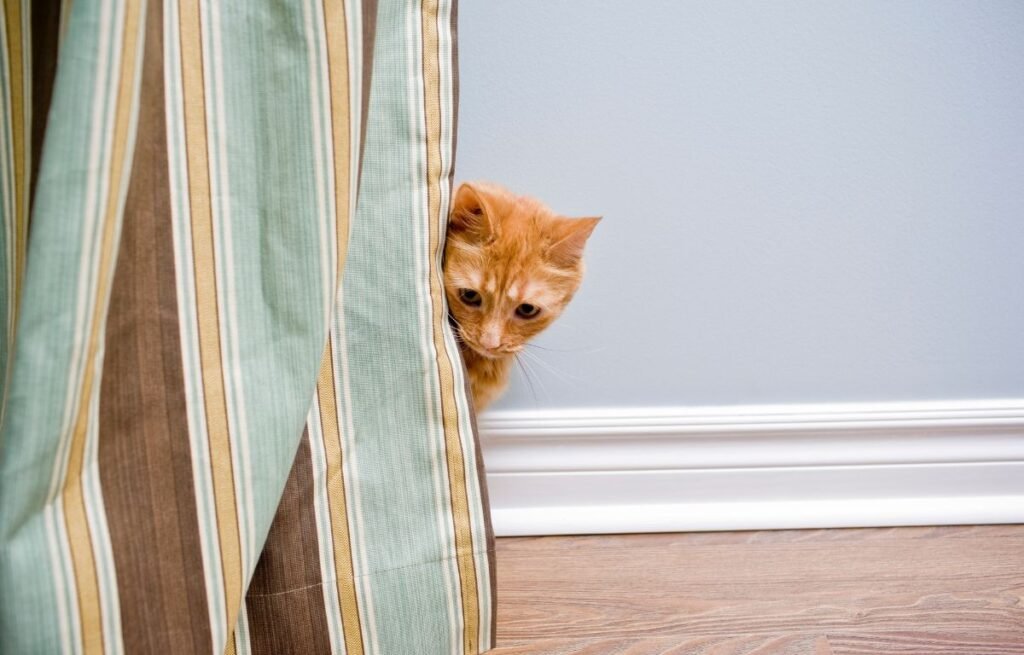
Understanding Why Some Cats Are Shy
Before you can build trust, it helps to understand what’s standing in the way.
Shyness in cats usually comes from one (or more) of these factors:
- Early life experiences – Kittens who weren’t gently handled early may grow into wary adults.
- Past trauma – Shelter cats or rescues may associate humans with fear.
- Genetics and personality – Some cats are naturally cautious observers.
- Sudden changes – New homes, new people, or loud environments can overwhelm sensitive cats.
A shy cat isn’t being difficult.
They’re protecting themselves.
What Trust Actually Looks Like in Cats
Trust doesn’t start with cuddles.
In shy cats, trust shows up quietly and gradually.
Early signs of trust-building include:
- Staying in the same room as you
- Eating while you’re nearby
- Watching you instead of fleeing
- Relaxed body posture (less crouching)
- Slow blinking from a distance
These small moments matter.
They’re your foundation.
Create a Safe Base First (Before Anything Else)
Trust can’t grow without safety.
Your shy cat needs a predictable, controlled environment where nothing feels forced.
Set up a “safe zone”
This should be a quiet area with:
- A covered bed or hiding spot
- Food and water nearby
- A litter box at a comfortable distance
- Minimal foot traffic
Let this be your cat’s territory.
Do not pull them out.
Do not invade it.
When a cat feels they can retreat, they’re more likely to come forward.

Let Your Cat Set the Pace
One of the biggest mistakes people make is trying to speed things up.
Shy cats build trust on their timeline.
That means:
- No chasing
- No forced petting
- No picking up “just to show love”
Sit nearby.
Read.
Scroll.
Be present without expectation.
Your calm presence teaches your cat something important:
“You are not a threat.”
Use Food as a Trust-Building Tool (Not a Bribe)
Food is one of the safest bridges between fear and trust.
Start by:
- Feeding on a consistent schedule
- Sitting quietly in the room during meals
- Gradually decreasing the distance over days or weeks
Eventually, you can:
- Place treats a few feet from you
- Toss treats gently without eye contact
- Let your cat approach on their own terms
Food creates positive associations — but only when pressure is removed.
Learn to Speak Cat Body Language
Shy cats communicate constantly — just not loudly.
Watch for:
- Ears turned sideways or back (stress)
- Tail wrapped tightly around the body
- Dilated pupils in calm lighting
- Freezing instead of fleeing
One powerful signal you can use back?
Slow blinking.
Slow blinking is a feline gesture of trust and safety. If you’re curious about why cats do this and how it strengthens bonds, there’s a detailed breakdown of this behavior in a guide on slow blinking in cats that explains why it’s often considered a quiet feline “I love you.”
Try this:
- Look at your cat softly
- Slowly close your eyes
- Open them gently
- Look away
If your cat blinks back — that’s a big win.
Avoid Direct Eye Contact at First
In cat language, staring can feel threatening.
Instead:
- Turn your body sideways
- Sit lower to the ground
- Let your gaze drift away naturally
You’re telling your cat:
“I see you. I’m not focused on controlling you.”
That’s trust-building.
Play Can Help — But Only When Your Cat Is Ready
For some shy cats, play is safer than touch.
Use interactive toys like:
- Wand toys
- Feather teasers
- Toys that create distance between your hands and the cat
Let your cat engage from afar.
No sudden movements.
No loud excitement.
Play helps shy cats:
- Release tension
- Build confidence
- Associate you with positive experiences
Respect the First “No”
The first time your cat walks away from you — that’s not failure.
That’s communication.
If your cat:
- Moves away when you reach out
- Stops eating when you get too close
- Retreats after brief contact
Pause.
Back up.
Try again later.
Every time you respect a boundary, trust grows.
Understand Sudden Changes in Affection
Sometimes shy cats surprise you.
They suddenly sit closer.
They rub against your leg.
They become more affectionate than expected.
If your once-distant cat is showing a shift, it can help to understand why cats sometimes change behavior. A helpful explanation of why cats suddenly become more affectionate can give insight into emotional safety, bonding stages, and trust milestones.
Trust isn’t linear.
It moves forward, pauses, and sometimes takes small steps back.
That’s normal.
Be Predictable — Cats Love Routine
Consistency builds confidence.
Try to:
- Feed at the same times daily
- Clean the litter box regularly
- Speak in a calm, familiar tone
- Move slowly around your cat
The more predictable you are, the safer your cat feels.
And safety is the doorway to trust.
Celebrate Quiet Progress
Trust-building with shy cats isn’t dramatic.
It looks like:
- Sitting closer than yesterday
- Choosing the couch instead of hiding
- Staying visible during visitors
- Grooming in your presence
As the saying goes, “Time spent with cats is never wasted.” — Sigmund Freud
With shy cats, time is the gift.
FAQs About Trust-Building in Shy Cats
How long does it take to build trust with a shy cat?
It can take weeks or months depending on the cat’s past experiences, personality, and environment. Slow progress is still progress.
Should I pick up my shy cat to help them get used to me?
No. Forced handling often delays trust-building and increases fear.
Can shy cats ever become affectionate?
Yes. Many shy cats form deep bonds once they feel safe — often becoming loyal, gentle companions.
Is it normal if my cat trusts only one person?
Absolutely. Some cats choose a single “safe human” and expand trust slowly from there.
Does talking to my cat help build trust?
Yes. Soft, calm talking can be reassuring, especially when paired with consistent routines.
Can play replace physical affection for shy cats?
In early stages, yes. Play can be a safer bonding method than touch.
Will my cat always be shy?
Some cats remain reserved, but trust can still be strong without being clingy or cuddly.
Conclusion: Trust Is Built, Not Forced
Learning How to Encourage Trust-Building in Shy Cats means shifting your expectations — and meeting your cat where they are.
Trust isn’t earned through control.
It’s earned through patience, respect, and quiet consistency.
When your shy cat finally chooses you — even in small ways — it’s one of the most meaningful bonds you’ll ever experience.
Follow us for more cat behavior insights at AskYourCat.com — because every cat has something to say.